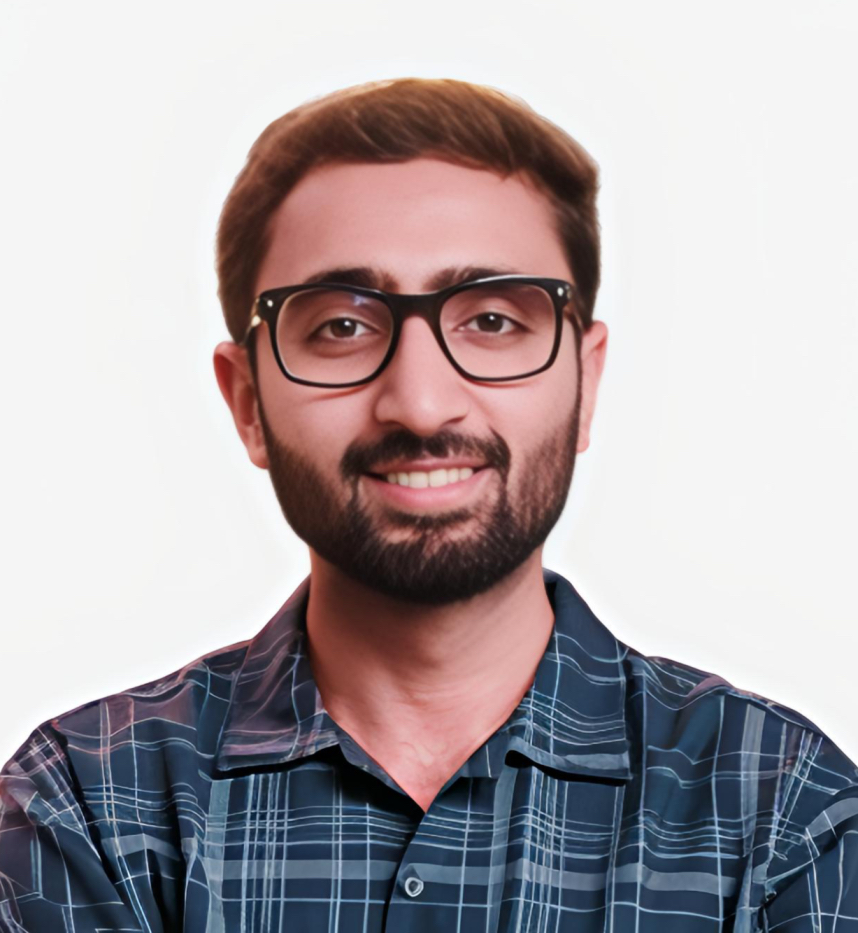
Hardik Srivastava
Applied Research Scientist
Researching and building large-scale intelligent language systems
Connect via Topmate

About
I'm a ML researcher and engineer pursuing an MS in Data Science at the University of Washington, where I focus on building controllable and efficient language-model systems. My interests span LLMs, reinforcement learning, representation learning, and scalable machine learning, with a focus on making intelligent systems more reliable, secure, and efficient.
At the Paul G. Allen School of CSE, I work with Prof. Zaid Harchaoui on controllable language generation, authorship privacy, and autonomous machine learning research. My research addresses the challenge of reducing author-identifying stylistic signals in written text while preserving its original meaning and communicative intent. To tackle this, I am exploring LLM alignment and post-training through feedback-driven evaluation and inference-time control mechanisms to steer model behavior across competing objectives. More recently, I'm looking into building autonomous research agents using reinforcement learning and bandit algorithms with delayed feedbacks to automate ML experimentation and accelerate optimization cycles by 15x.
Prior to UW, I spent over two years as an Applied Scientist at JPMorgan Chase, building and deploying production ML/AI systems for AI Trust & Safety. I've worked across graph learning, multimodal NLP, large-scale entity resolution, fraud detection and distributed ML infrastructure. My work contributed to over $220M in annual fraud savings as well. In summer 2026, I returned to JPMorganChase as an Applied Scientist Intern to work on temporal graph learning for adversarial actor modeling and scalable multi-GPU training.
Earlier, I worked as a MLE at Samsung Research, contributing to production-scale NLU intent routing for the Samsung Bixby assistant and optimizing word-sense disambiguation models through INT8 Quantization-Aware Training. I also conducted research in Human-Computer Interaction and NLP at the Accessible Computing Lab at McGill University as a Mitacs Research Scholar.
I enjoy working at the intersection of research and engineering, taking challenging ML problems from formulation and experimentation to efficient, scalable systems. Open to connect if your team is building something at the intersection of LLM learning, reasoning, and trustworthy AI
Research Interests
My core research interests lie at the intersection of Natural Language Processing, Generative AI, Graph Representation Learning, Human-AI Interaction, Causality, and Trustworthy ML. I focus on designing language and multimodal systems that are interactive, adaptable and explainable to diverse user needs, and capable of operating reliably in high-stakes environments.
- LLM Post-training, Self-supervision & Evaluation
- Behavioral AI and Human-Computer Interaction
- AI Alignment, Privacy-Preserving NLP & Explainability
Skills
Machine Learning & AI
Natural Language Processing
Research Tooling & MLOps
Core Programming & CS
Big Data
ML Systems & Infra
News
Publications
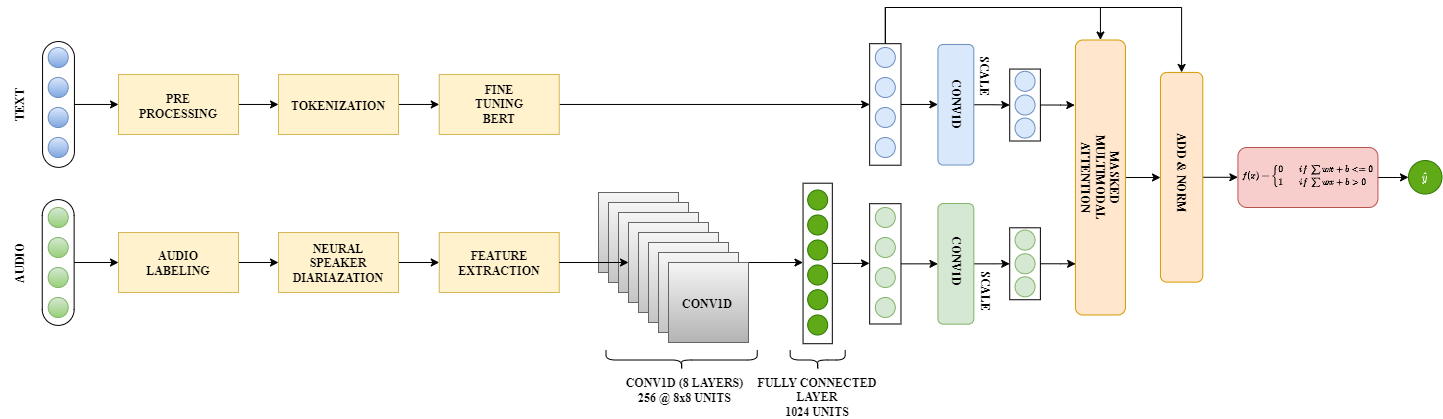
Multi-Modal Sentiment Analysis Using Text and Audio for Customer Support Centers
Hardik Srivastava, Sneha Sunil, K. Shantha Kumari, P. Kanmani
ICACTCE: International Conference on Advances in Communication Technology and Computer Engineering (Springer Nature) (2023)
Proposed CM-BERT, a novel multimodal sentiment analysis model that fuses textual and audio features to robustly capture customer sentiment
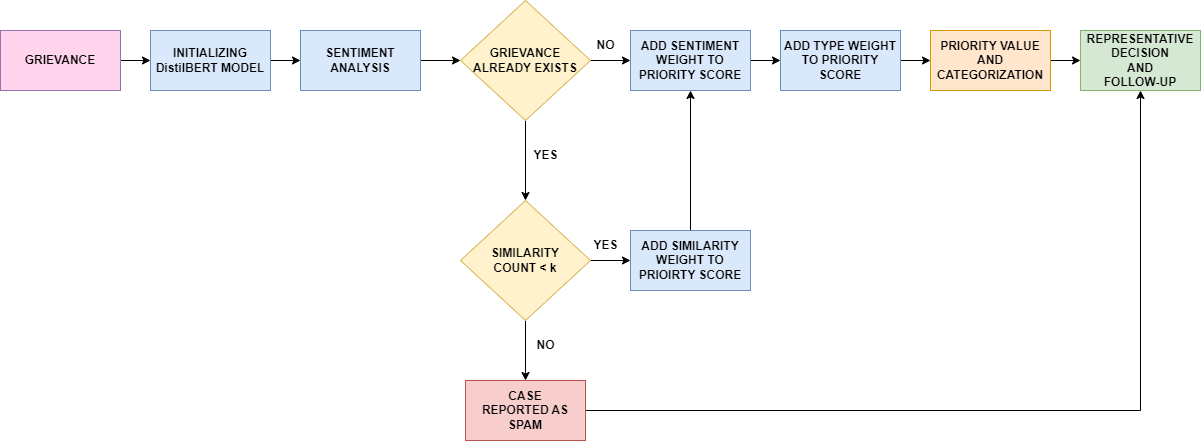
Decision Support Complaint Prioritization System using a Statistical Multi-Method Algorithmic approach
Hardik Srivastava, Mayank Jha, T. Karthick
Undergraduate Thesis (2023)
Proposed a statistical multi-method framework combining rule-based scoring and algorithmic ranking to integrate diverse decision signals into a coherent prioritization score for efficient re-ranking.
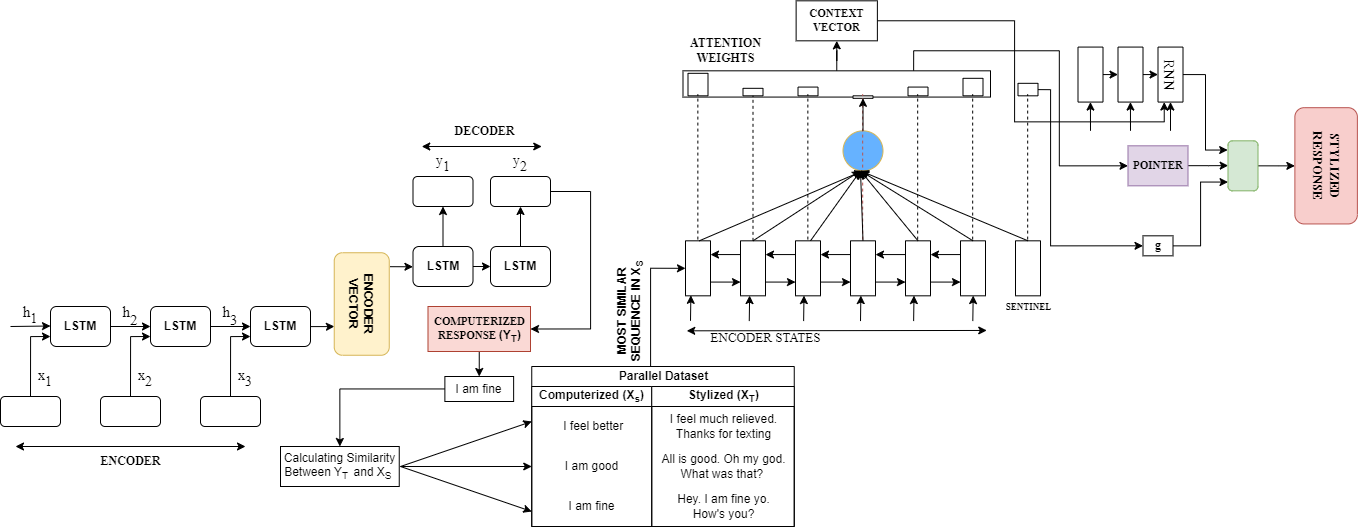
Neural Text Style Transfer with Custom Language Styles for Personalized Communication Systems
Hardik Srivastava, Sneha Sunil, K. Shantha Kumari
ICKECS'22: International Conference on Knowledge Engineering and Communication Systems (IEEE) (2022)
Introduced StyleLM, a style-conditioned neural text transfer model enabling fine-grained control over language style for personalized communication.
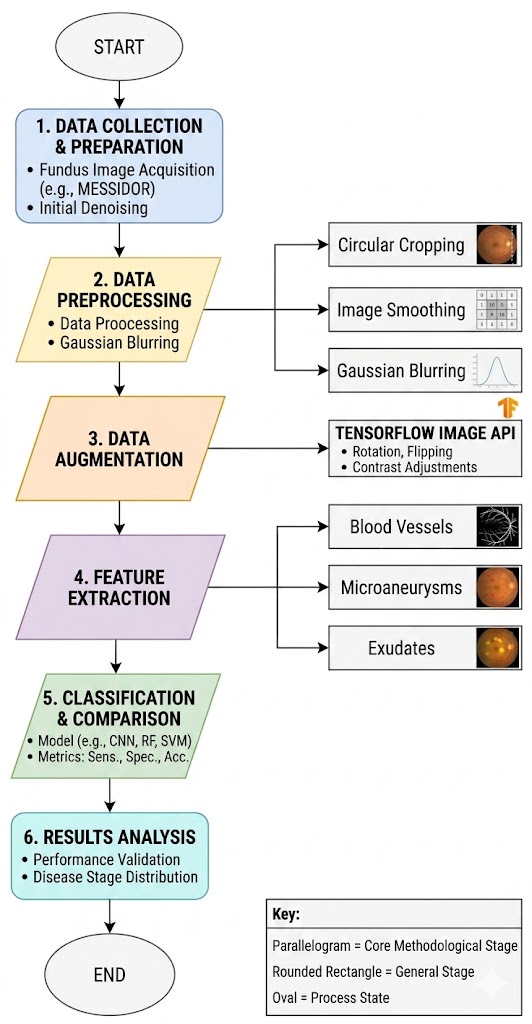
Automatic Screening and Staging of Multi-Stage Diabetic Retinopathy using Deep Learning techniques
Hardik Srivastava, T. Rajalakshmi
Preprint (2022)
Proposed a deep learning framework for automated detection and staging of multi-stage diabetic retinopathy.

Using NLP Techniques for Enhancing Augmentative and Alternative Communication Applications
Hardik Srivastava
IJREAM: International Journal for Research in Engineering Application & Management (UGC) (2021)
NLP-based framework to enhance AAC applications, enabling dynamic vocabulary expansion and more expressive sentence generation.
Multi-Modal Sentiment Analysis Using Text and Audio for Customer Support Centers
Hardik Srivastava, Sneha Sunil, K. Shantha Kumari, P. Kanmani
ICACTCE: International Conference on Advances in Communication Technology and Computer Engineering (Springer Nature) (2023)
Proposed CM-BERT, a novel multimodal sentiment analysis model that fuses textual and audio features to robustly capture customer sentiment
Neural Text Style Transfer with Custom Language Styles for Personalized Communication Systems
Hardik Srivastava, Sneha Sunil, K. Shantha Kumari
ICKECS'22: International Conference on Knowledge Engineering and Communication Systems (IEEE) (2022)
Introduced StyleLM, a style-conditioned neural text transfer model enabling fine-grained control over language style for personalized communication.
Using NLP Techniques for Enhancing Augmentative and Alternative Communication Applications
Hardik Srivastava
IJREAM: International Journal for Research in Engineering Application & Management (UGC) (2021)
NLP-based framework to enhance AAC applications, enabling dynamic vocabulary expansion and more expressive sentence generation.
Decision Support Complaint Prioritization System using a Statistical Multi-Method Algorithmic approach
Hardik Srivastava, Mayank Jha, T. Karthick
Undergraduate Thesis (2023)
Proposed a statistical multi-method framework combining rule-based scoring and algorithmic ranking to integrate diverse decision signals into a coherent prioritization score for efficient re-ranking.
Automatic Screening and Staging of Multi-Stage Diabetic Retinopathy using Deep Learning techniques
Hardik Srivastava, T. Rajalakshmi
Preprint (2022)
Proposed a deep learning framework for automated detection and staging of multi-stage diabetic retinopathy.
Decision Support Complaint Prioritization System using a Statistical Multi-Method Algorithmic approach
Hardik Srivastava, Mayank Jha, T. Karthick
Undergraduate Thesis (2023)
Proposed a statistical multi-method framework combining rule-based scoring and algorithmic ranking to integrate diverse decision signals into a coherent prioritization score for efficient re-ranking.
Multi-Modal Sentiment Analysis Using Text and Audio for Customer Support Centers
Hardik Srivastava, Sneha Sunil, K. Shantha Kumari, P. Kanmani
ICACTCE: International Conference on Advances in Communication Technology and Computer Engineering (Springer Nature) (2023)
Proposed CM-BERT, a novel multimodal sentiment analysis model that fuses textual and audio features to robustly capture customer sentiment
Automatic Screening and Staging of Multi-Stage Diabetic Retinopathy using Deep Learning techniques
Hardik Srivastava, T. Rajalakshmi
Preprint (2022)
Proposed a deep learning framework for automated detection and staging of multi-stage diabetic retinopathy.
Neural Text Style Transfer with Custom Language Styles for Personalized Communication Systems
Hardik Srivastava, Sneha Sunil, K. Shantha Kumari
ICKECS'22: International Conference on Knowledge Engineering and Communication Systems (IEEE) (2022)
Introduced StyleLM, a style-conditioned neural text transfer model enabling fine-grained control over language style for personalized communication.
Using NLP Techniques for Enhancing Augmentative and Alternative Communication Applications
Hardik Srivastava
IJREAM: International Journal for Research in Engineering Application & Management (UGC) (2021)
NLP-based framework to enhance AAC applications, enabling dynamic vocabulary expansion and more expressive sentence generation.
Projects
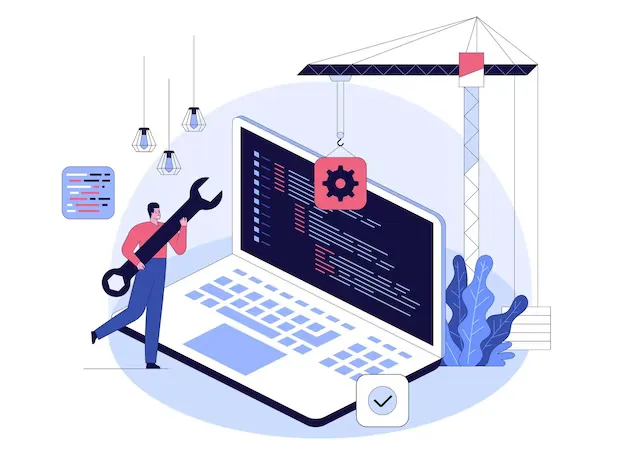
Engineered a memory compression framework for long-context LLM agents. Utilizing FAISS-based dense retrieval, hierarchical semantic indexing, and adaptive replay mechanisms, this architecture mitigates context decay and enables persistent, multi-session agentic reasoning across complex computational pipelines.
Trained LLMs for strategic deception and negotiation in a Market for Lemons env using PPO. Engineered a two-stage reasoning pipeline to maximize strategic rewards without leaking hidden states to opponents. Scaled training via QLoRA for parameter-efficient fine-tuning on instruct models.
Built a dynamic ad generation and placement engine for X (Twitter), using Grok 4.1 Reasoning models. Utilized behavioral scroll telemetry and temporal interaction signals to optimize in-feed ad placement improving relevance and engagement.
Behavioral AI platform that predicts user cognitive load in real-time using temporal sequence modeling. Engineered a React app to extract micro-temporal typing anomalies like dwell time & flight time using 136M keystrokes.
Transformer explainability framework designed to demystify language model generation. Utilizes Integrated Gradients to map and visualize token-level prediction attributions enabling deep interpretability.
Domain-Specific Language (DSL) framework powering a no-code trading platform. Leverages hybrid recommendation models to dynamically compile drag-and-drop user inputs into optimized algorithms, thereby minimizing risk and expected shortfall.
Articles
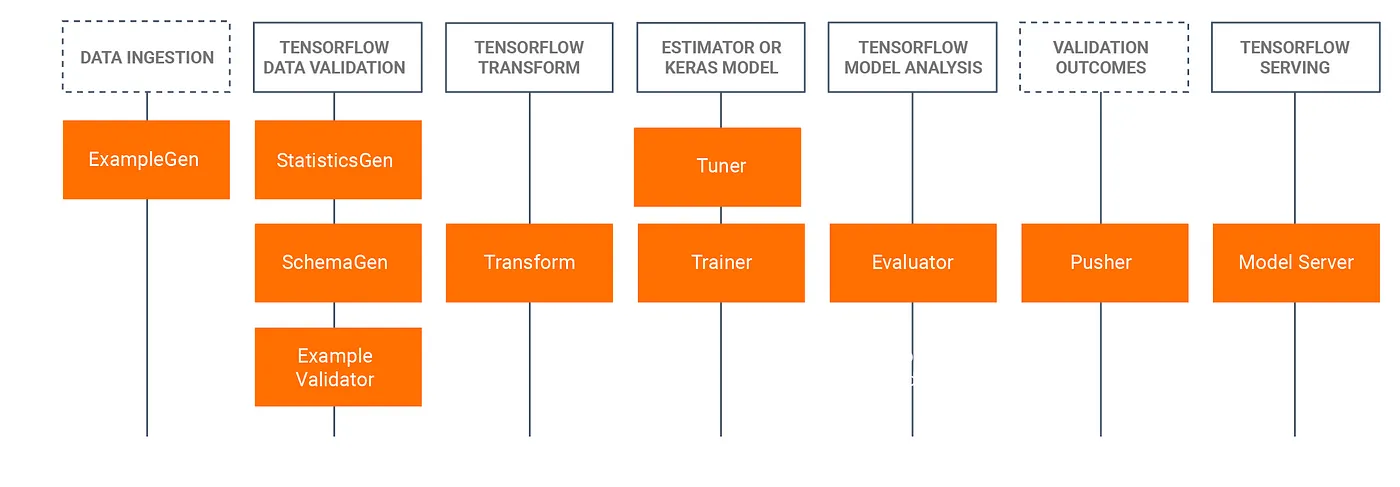
Deploying Machine Learning workloads efficiently in Production using TFX
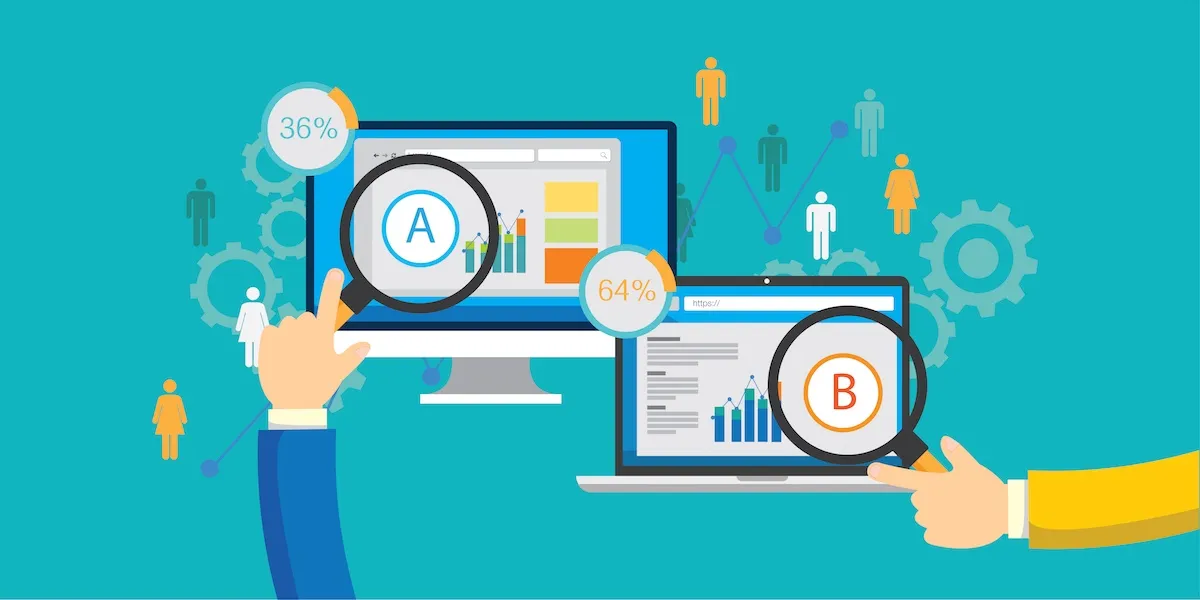
Learning how to let the customer do the talking, without actually talking.
Vitæ
Here is my Resume.
-
JPMorganChase June - Sept 2026Applied Scientist Intern
Temporal Graph-ML for Adversarial Actor Modeling -
University of Washington Sept 2025 - PresentGraduate Research Assistant
Optimizing LLM Alignment and Interpretability -
University of Washington Sept 2025 - PresentMS Student
Masters in Data Science -
JPMorganChase May - Aug 2025Applied Scientist II
Fraud Prevention, Graph ML and Contrastive Pre-Training -
JPMorganChase June 2023 - May 2025Applied Scientist
Fraud Intelligence and Representaion Learning -
JPMorganChase. Feb - June 2023Software Engineer Intern - AI/ML
Elastic Search and Semi-Supervised Ranking -
McGill University June - Sept 2022Research Intern
NLP/HCI at Accessible Computing Lab -
Samsung Global Research Jan - June 2022Machine Learning Engineer - Intern
Samsung Bixby's search optimization using Quantization-Aware Training -
Inventuers Sept - Nov 2023Founder & Tech Lead
Co-founded and released Curae, a platform to streamline healthcare services -
DRDO, Govt. of India Aug - Nov 2021Research Intern
Video Stabilization and Denoising for Long-Range Camera-feeds in Military Drones -
SoftSensor.ai Apr - Oct 2021Data Scientist Intern
Pattern Recognition in Whole Slide Imaging (Lymphoma) -
SRM University Jan - July 2021Undergraduate Research Assistant
Predictive Modeling for Diabetic Retinopathy detection -
SRM University May 2019 - June 2023B.Tech Student
Computer Science Engineering with a specialization in Big Data Analytics